Welcome to your hub for used car market research in Riverside CA. If you are comparing prices, trims, and ownership costs, this guide explains how to analyze real local data before you choose a vehicle. Explore in stock options on used-inventory, study real world sale prices on sold-inventory, and learn smart shopping steps on car-buying-guide-riverside-ca. We also link to nearby market pages, so you can compare Riverside against Los Angeles, San Diego, and Orange County for an informed decision.
Inside you will find Riverside specific pricing factors, seasonal demand patterns, inspection checklists for Inland Empire driving, and a framework to benchmark fair value. You can also review financing education and credit options on used-car-financing-riverside-ca and second-chance-auto-financing-riverside-ca. Use this page to reduce guesswork and turn your research into a confident plan.
This Riverside CA research page is designed to help you compare vehicles, understand pricing, and prepare for a smooth purchase experience. For transparency on data use and site policies, review privacy-policy and visitor-agreement. You can also read insights on our blog and learn more on about-us. Questions are always welcome on contact-us.
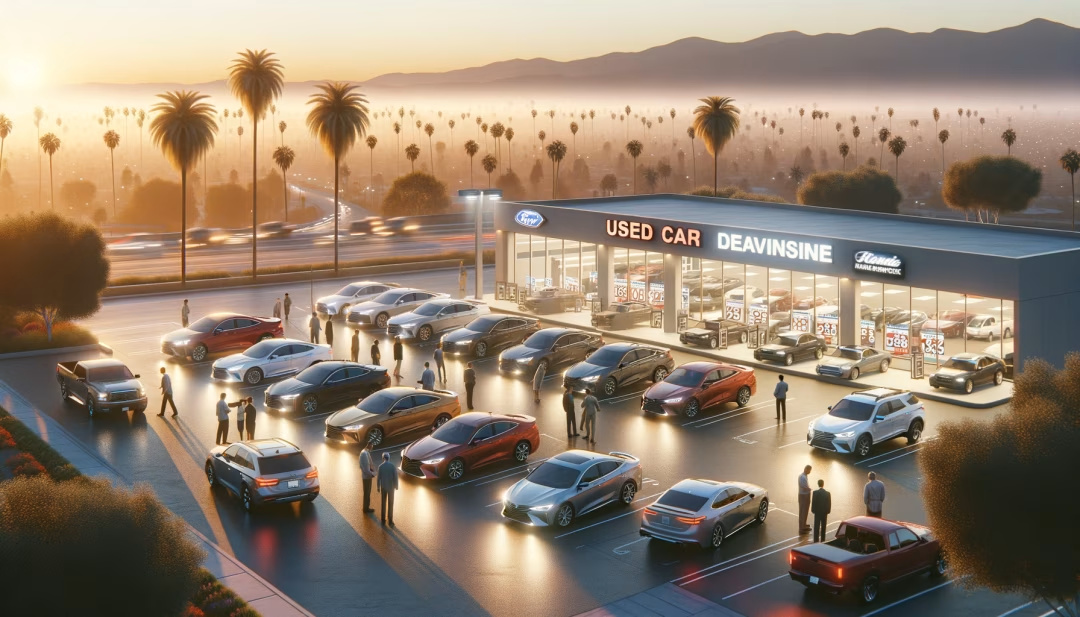
Riverside sits at the heart of the Inland Empire and serves a large commuter base connected by SR 91, I 215, and I 10. Daily mileage tends to be higher than in many urban cores, which affects the supply of vehicles with above average miles. Local climate is hot and dry, so cooling systems, air conditioning, and battery health matter more during inspections. Popular body styles include compact sedans for commuting, midsize crossovers for families, and pickups for work related hauling. Student demand from nearby colleges and year round recreation also influence the types of vehicles that turn quickly. Because Riverside buyers often cross shop with nearby counties, prices can vary week to week as inventory flows between Los Angeles, Orange, and San Diego markets. This guide shows how to read those signals and use them to your advantage.
Reliable benchmarks start with comparable vehicles that share the same model year, trim, drivetrain, mileage bracket, condition level, and accident history. Two tools on this site help you build a Riverside specific view. First, browse used-inventory to see live price and equipment differences between trims. Then review sold-inventory to learn what similar vehicles actually sold for. When you compare, adjust your target price for meaningful differences like new tires, recent brakes, or optional packages. Minor cosmetic wear may be normal for age and miles and can sometimes support a small discount. A single owner vehicle with consistent service records often commands a premium versus a similar model with gaps in maintenance. If your top choice is priced above your comp range, ask to see reconditioning investments that justify the difference, such as new tires, a fresh battery, or updated safety components.
Seasonal patterns in the Inland Empire create small but important price waves. Early spring can bring more inventory and more buyers, which tightens deals. Summer heat stresses cooling systems and batteries, so late summer shoppers should inspect those items carefully. In fall, commuter friendly sedans and crossovers may see steady demand as school routines return. Year end model changes can shift attention to new inventory, sometimes opening value on late model used vehicles. Regional factors also matter. When fuel prices rise, compact sedans and hybrids move faster, while larger trucks may show more negotiability. In years when construction and logistics surge, used pickups and cargo vans in Riverside and San Bernardino often sell quickly. Tracking these shifts for even a few weeks can improve your timing.
Total cost of ownership is more than the purchase price. In Riverside CA, plan for taxes and registration, smog if required, insurance based on your driving profile, and typical maintenance for your model. Tires and brakes can be significant on heavier crossovers and trucks. Commuters on SR 91 and I 215 may prefer vehicles with adaptive cruise and driver assist, which can reduce fatigue and may help insurance ratings depending on carrier. Hybrid and plug in models often reduce fuel expense, but battery health and warranty status should be verified. Build a simple spreadsheet with fuel, insurance, maintenance, and an emergency repair reserve to understand the monthly reality before purchase.
Financing terms have a major effect on overall cost. Shop your rate and term early using resources on used-car-financing-riverside-ca. Compare offers from credit unions, banks, and dealership programs side by side. A small rate difference can save meaningful total interest over 48 to 72 months. If you are rebuilding credit, review guidance on second-chance-auto-financing-riverside-ca to understand down payment expectations and how to choose a term that keeps payments stable while limiting interest paid. Avoid extending term beyond the useful life you expect from the vehicle. When you negotiate the vehicle price, keep it separate from monthly payment to preserve clarity. Verify there are no add ons you do not want, and understand the coverage details of any protection products before you decide.
Strong negotiation is a calm presentation of facts. Bring two or three recent comps from sold-inventory that match trim and mileage. Note any reconditioning already completed on the vehicle you want and quantify differences that justify your target range. If your inspection finds upcoming maintenance like tires or brakes, include a reasonable adjustment. Keep the conversation focused on the out the door number, separate from financing. If your schedule allows, monitor the vehicle for a few days to see if price movement occurs, while understanding that clean one owner vehicles can sell quickly. The goal is a fair agreement supported by local market evidence.
Start with used-inventory to compare trims, photos, equipment, and prices. Use filters to align mileage and budget. Next, open sold-inventory to see actual transaction context for Riverside and nearby counties. For a structured plan, visit car-buying-guide-riverside-ca, or read practical tips on the blog. Financing questions are covered on used-car-financing-riverside-ca, and credit rebuilding guidance is on second-chance-auto-financing-riverside-ca. If you want to compare trends across the region, check these market pages: used-car-market-research-los-angeles-ca, used-car-market-research-san-diego-ca, used-car-market-research-orange-ca, and used-car-market-research-san-bernardino-ca.
Cross market awareness sharpens your sense of value. If a specific trim is scarce in Riverside but more common one county over, you may gain leverage or find better equipment at a similar price. Review these pages to compare pricing, supply, and seasonal patterns across Southern California.