Shopping for a used car in San Francisco CA brings unique opportunities and challenges. Steep hills, tight parking, microclimates, and busy commute corridors all play a role in choosing the right vehicle. This car buying guide covers how to set a realistic budget for Bay Area ownership, which body styles work best in the city, what to check during inspections for hill driving, and how financing options can fit a range of credit histories. You will also find tips for comparing models popular in San Francisco, insights on emissions and registration, and best practices for test drives on varied terrain. Use this page alongside resources like used-inventory and blog to move from research to confident ownership with fewer surprises and smarter decisions tailored to life in San Francisco.
The guidance below focuses on San Francisco realities like parallel parking, cable car hills, car share alternatives, and weekend trips to the coast or mountains. It includes checklists, inspection advice, and links to in-depth market research such as used-car-market-research-san-francisco-ca plus financing information at used-car-financing-san-francisco-ca.
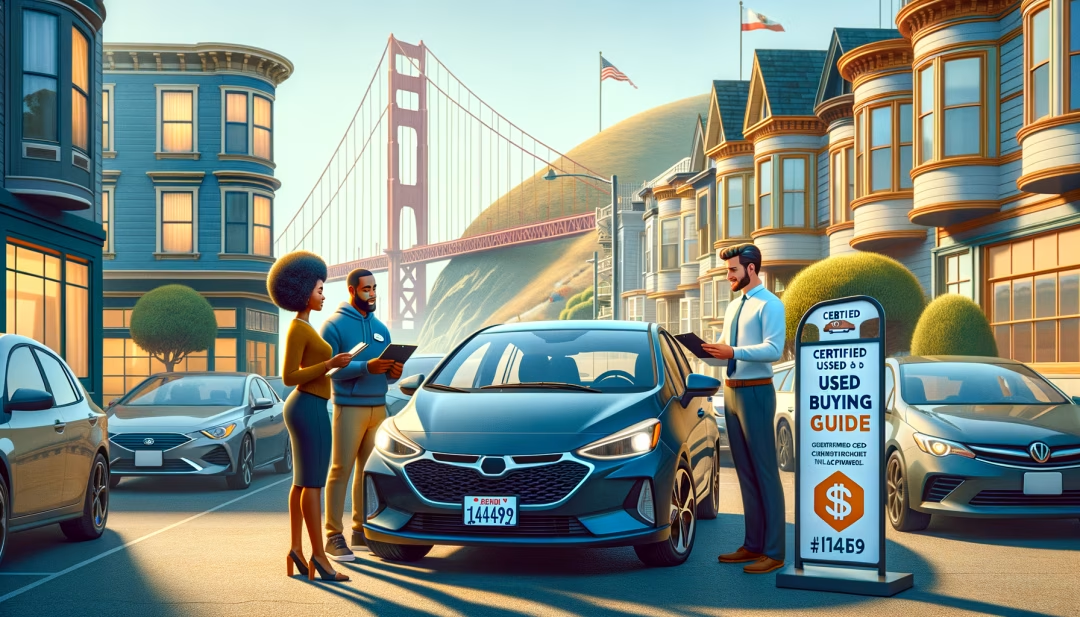
Total cost of ownership in San Francisco CA extends beyond the purchase price. Insurance, parking, tolls, registration, fuel or charging, and maintenance can vary block by block. Before you browse used-inventory, build a monthly budget that accounts for both fixed and variable costs. If you commute across bridges or park on the street, leave room for changes as your routine evolves. A clear, realistic budget helps you narrow choices quickly and compare offers with confidence.
Tight streets and dense neighborhoods often reward vehicles with compact footprints. Hatchbacks and small sedans make parallel parking simpler, while small crossovers add ground clearance for steep driveways without becoming cumbersome. If you head to snow country in winter, look for all wheel drive or advanced traction features that balance urban maneuverability with weekend versatility. Roof racks or fold flat cargo areas help for surf days, camping, or moving gear between neighborhoods.
Hills and frequent starts can stress brakes, clutches, and transmissions. Coastal air can accelerate corrosion on underbodies and brake hardware. During any pre purchase inspection, ask technicians to evaluate components that bear the brunt of San Francisco driving. If you choose an EV or hybrid, request a battery health report and confirm software updates. Keep copies of service records and consider a second opinion before you finalize paperwork.
In California, verify a clean title status and confirm a recent smog inspection where applicable. Review third party history reports to check for prior damage, open recalls, and consistent mileage. California registration details and transfer requirements can change, so consult official DMV resources during your paperwork review. Keep print or digital copies of all documents for your records.
Whether you have prime credit or are rebuilding, it is helpful to compare offers across lenders. Explore second-chance-auto-financing-san-francisco-ca for flexible approval paths, and read about rates and loan structures at used-car-financing-san-francisco-ca. Consider total loan cost, not just the monthly payment. Shorter terms reduce interest paid but raise monthly outlay, while longer terms can free cash flow with more total interest. Choose a balance that fits your budget without overextending.
Insurance premiums vary with garaging address, mileage, and coverage limits. Get multiple quotes and review deductibles and roadside coverage options, especially if you park on steep grades or rely on street parking. For registration, follow current California DMV steps, including title transfer, taxes, and emissions where required. Policies and fees can update, so confirm details through official sources during the purchase process.
A smart test drive simulates your real routine. Plan a loop with a mix of stop and go segments, hills, tight turns, and a parallel parking attempt. Listen for brake noise, evaluate hill holds, and check visibility while maneuvering in tight spaces. Parking practice reveals turning radius, camera clarity, and sensor effectiveness before you commit.
Electric and hybrid models can be well suited to San Francisco traffic and short city trips. If you live in an apartment, confirm access to reliable charging at work, public stations, or nearby facilities. Ask for battery health documentation and review estimated range in colder coastal weather. For plug in models, plan charging around your weekly routine and consider time of use electricity rates where available from your utility provider. For hybrids, verify maintenance records for battery cooling systems and routine service intervals.
Local demand can support strong trade in values, especially for well maintained vehicles with service documentation. Clean and declutter your car, repair inexpensive cosmetic issues, and bring maintenance records. Research recent sale prices using blog insights and sold-inventory to understand real world values. Be transparent about known issues to keep the process smooth and consistent with inspection findings.
Inventory and pricing shift throughout the year. Tax refund season may increase demand for popular segments, while late year periods can bring model year transitions that affect used pricing. Keep an eye on used-car-market-research-san-francisco-ca and neighboring analyses such as used-car-market-research-alameda-ca and used-car-market-research-san-mateo-ca to understand regional movements. Monitoring trends helps you recognize fair prices and time your purchase more strategically.
Compact hatchbacks, efficient sedans, small crossovers, and hybrids are frequent choices for city living. When comparing models, focus on visibility, turning radius, safety features, and driver assistance calibrated for urban speeds. If you need flexible cargo space, check seat fold configurations and height of the cargo opening. For taller drivers, test headroom on uphill starts where the seat back angle can change comfort. Combine test drive experience with reliability research from our blog and review recent examples in sold-inventory to see what holds value locally.
A short checklist clarifies remaining questions and ensures the vehicle suits your San Francisco routine. Keep copies of every document and confirm anything promised in writing is included in the final paperwork. When everything aligns with your budget and needs, you can move forward with greater peace of mind.